

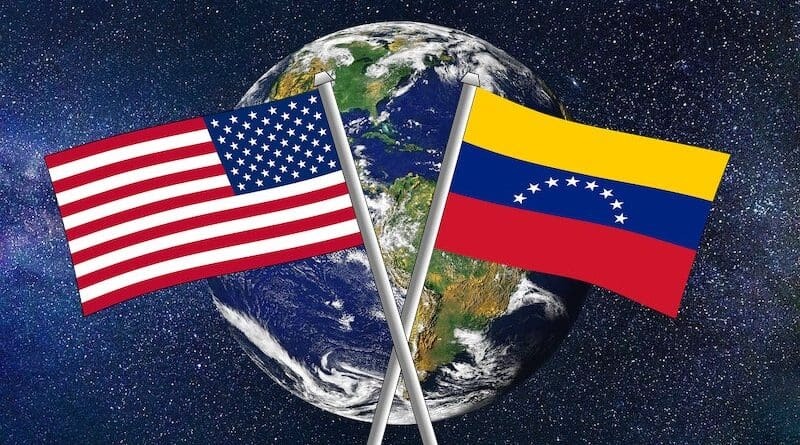
In December 2025, relations between the United States and Venezuela have reached a boiling point. The past weeks have seen a U.S. military buildup in the Caribbean, the seizure of a Venezuelan oil tanker, and public warnings from both governments that military confrontation is possible.
According to reports from DW, Al Jazeera, and CNN, the U.S. has intensified naval operations off Venezuela’s coast, citing drug trafficking and oil smuggling. Meanwhile, Venezuela calls the moves “acts of international piracy,” accusing the U.S. of trying to provoke war under the pretense of counter-narcotics and democracy enforcement.
🔥 Key Developments This Month

- Oil Tanker Seized: The U.S. Navy intercepted a Venezuelan-flagged oil tanker. The White House claims it violated international sanctions.
- Military Escalation: The U.S. launched limited strikes against what it called “drug boats.” Venezuela responded by moving missile systems closer to the coast.
- Diplomatic Breakdown: Talks via Oslo intermediaries stalled. Venezuela says the U.S. is preparing for regime change.
- Trump’s Role: President Trump, in his second term, has taken a more aggressive stance, calling Maduro’s regime “a threat to hemispheric security.”
🛢️ What’s Driving the Conflict?
Oil and Economic Power
Venezuela holds the largest proven oil reserves in the world. The U.S. accuses Caracas of illegally exporting crude in violation of sanctions, while Venezuela sees U.S. enforcement as a smokescreen for control over oil markets.
Sanctions and Pressure

For years, Venezuela has suffered under crippling U.S. sanctions targeting oil, banking, and food imports. Critics argue the U.S. is deliberately using “economic warfare” to collapse the Maduro government.
Security and Influence
Washington accuses Venezuela of harboring narcotraffickers and foreign agents from Iran and Russia. These allegations have justified naval operations and the militarization of the Caribbean.
⚠️ Will There Be War in 2026?

Some in U.S. Congress are debating a War Powers Resolution. Though full-scale war remains unlikely, the chance of a limited conflict — including airstrikes, naval blockades, or proxy fighting — is growing.
If Venezuela retaliates or pulls in allies like Russia or Iran, the crisis could escalate rapidly.
🔮 What Happens Next?
Scenario 1: Escalation Into Conflict
The U.S. may launch pre-emptive strikes on coastal radar or oil facilities. Venezuela could retaliate with missiles or cyber attacks.
Scenario 2: Negotiated De-escalation
Mediators like Brazil or the EU could broker a deal: limited sanctions relief in exchange for election supervision or arms withdrawal.
Scenario 3: Prolonged Tension
The crisis could “freeze” into a standoff — with U.S. ships circling and Venezuelan troops mobilized, but no open war.
🌎 Why It Matters Globally

- Oil prices could surge if shipping routes near Venezuela are threatened
- A new migration wave could pressure neighboring countries and U.S. borders
- The crisis could strengthen Russia, Iran, and China’s role in Latin America
- Regional stability in Colombia, Brazil, and the Caribbean is at risk
✅ Final Thoughts
The U.S.–Venezuela confrontation in December 2025 is no longer just about ideology. It’s a collision of energy, power, and global positioning.
What happens next could define the future of the Western Hemisphere for decades.
Stay informed — and for gear related to tactical operations, uniforms, or regional procurement, visit outdoor3.com.
